 Equipo ViaParaguay
Over the last five years, Paraguay has quietly emerged as South America's most accessible destination for those seeking legal residency outside their home country. This is not a passing trend: it reflects a combination of structural factors that none of its regional neighbors can easily replicate.
Sustained post-pandemic growth
Data from Paraguay's Dirección General de Migraciones confirm the trend. Paraguay issued more than 18,000 temporary and permanent residencies in 2023, with sustained growth since 2020 when the pandemic accelerated a reassessment of priorities for thousands of Latin American families. In 2024, Argentines, Colombians and Venezuelans represented over 60% of all applications, followed by Brazilians and citizens of Spain and Italy.
The profile of the new resident is not a retiree seeking sun and beaches. It is a professional aged 30 to 50, with income in dollars or euros, evaluating the cost-benefit of living in a stable, low-cost country with minimal taxation on foreign-source income.
Why Paraguay wins where Uruguay and Argentina fall short
The comparison with Uruguay is inevitable: both countries offer institutional stability and legal certainty, but the cost of living in Montevideo easily doubles that of Asunción. A rental in Pocitos (Montevideo's premium neighborhood) ranges between USD 1,200 and 2,500 per month; in Villa Morra or Carmelitas — Asunción's equivalent districts — the same standard costs between USD 500 and 1,100. Healthcare, private education and food costs follow the same ratio.
Paraguay applies the territorial tax principle: income generated outside the country is simply not taxed. A consultant invoicing European clients while living in Asunción pays zero tax on that income.
Communities that have already settled
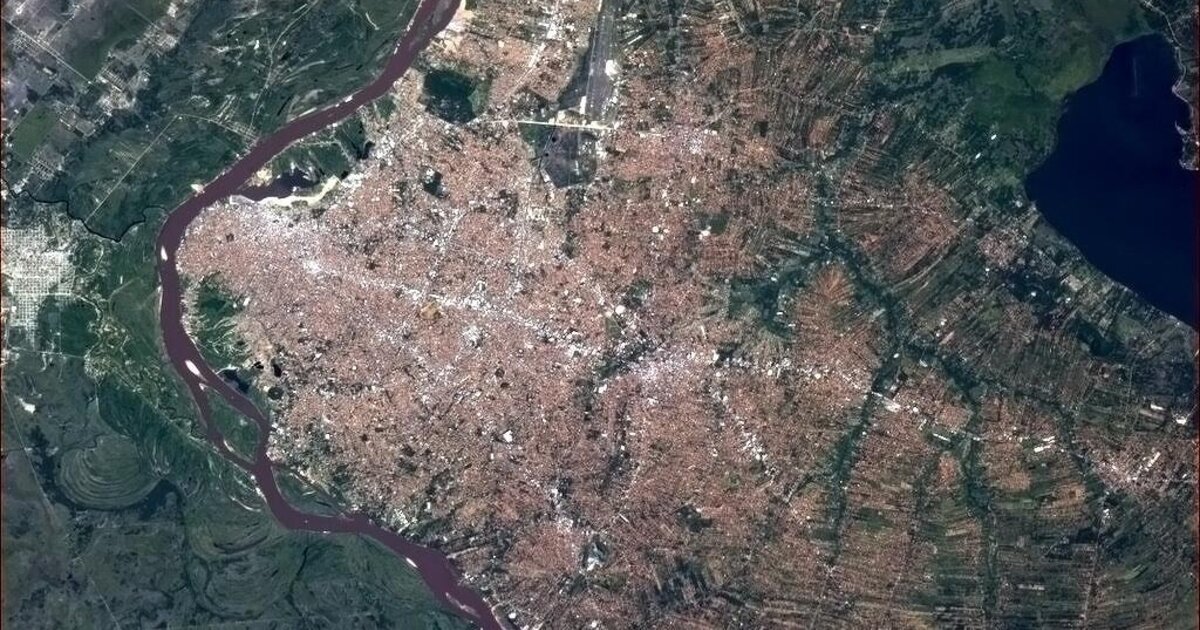
The phenomenon has concrete geography. In Asunción, Villa Morra and Carmelitas neighborhoods concentrate the highest density of recent Argentine residents. Bilingual cafes, restaurants and coworkings emerged in the last three years along Avenidas Mariscal López and España. The Paseo La Galería corridor and surrounding streets concentrate European digital nomads, with coworking spaces including a WeWork location that opened in 2019.
Low barriers to entry
The Paraguayan immigration process, compared to any OECD country, is surprisingly accessible. The most common route is the 2-year temporary residency, requiring basic documentation and processed at the Dirección de Migraciones within 30 to 90 business days with support from a local attorney. After 2 years without violations, permanent residency is obtained almost automatically. Total costs — including legal fees — range from USD 800 to 1,500.
Stability reflected in numbers
The Paraguayan guaraní has one of the lowest volatilities in the region against the dollar. The Banco Central del Paraguay kept inflation below 4% annually for most of the past decade. The economy grew at an average of 4.2% annually in the 2015–2024 period, driven by agribusiness, hydroelectric energy (Itaipú and Yacyretá contribute 25% of national GDP in foreign currency) and an expanding services sector.
Are you evaluating Paraguay as a place to live? Explore our Living section → or chat with an advisor.